Why Using an SSH Bastion Host is Essential for Secure Network Device Management
Managing network infrastructure securely is a critical responsibility for IT and network teams. Firewalls, routers, switches, and other infrastructure devices are the backbone of an organization's connectivity, and unauthorized access to these systems can lead to serious security incidents.
One effective approach to strengthen security and control administrative access is the use of an SSH bastion host.
What is an SSH Bastion Host?
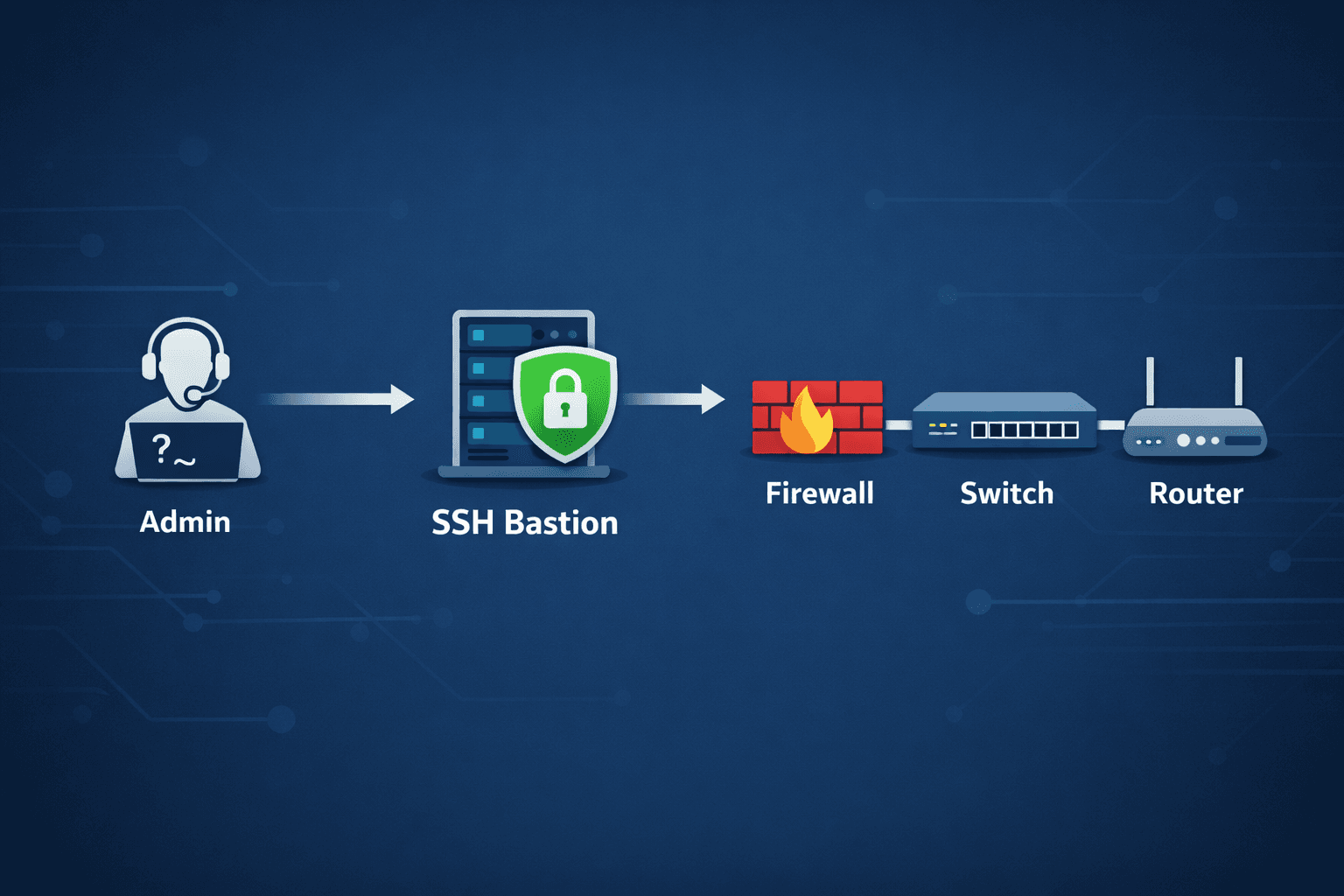
An SSH bastion host (sometimes called a jump server) is a dedicated system that acts as a secure gateway between administrators and the internal network infrastructure.
Instead of allowing direct SSH access to network devices from multiple workstations, administrators first connect to the bastion host. From there, they can securely access the target devices.
This architecture creates a single controlled entry point for administrative access and significantly improves the overall security posture of the infrastructure.
Accessing Network Devices Through an Asset with ConnectMyAssets
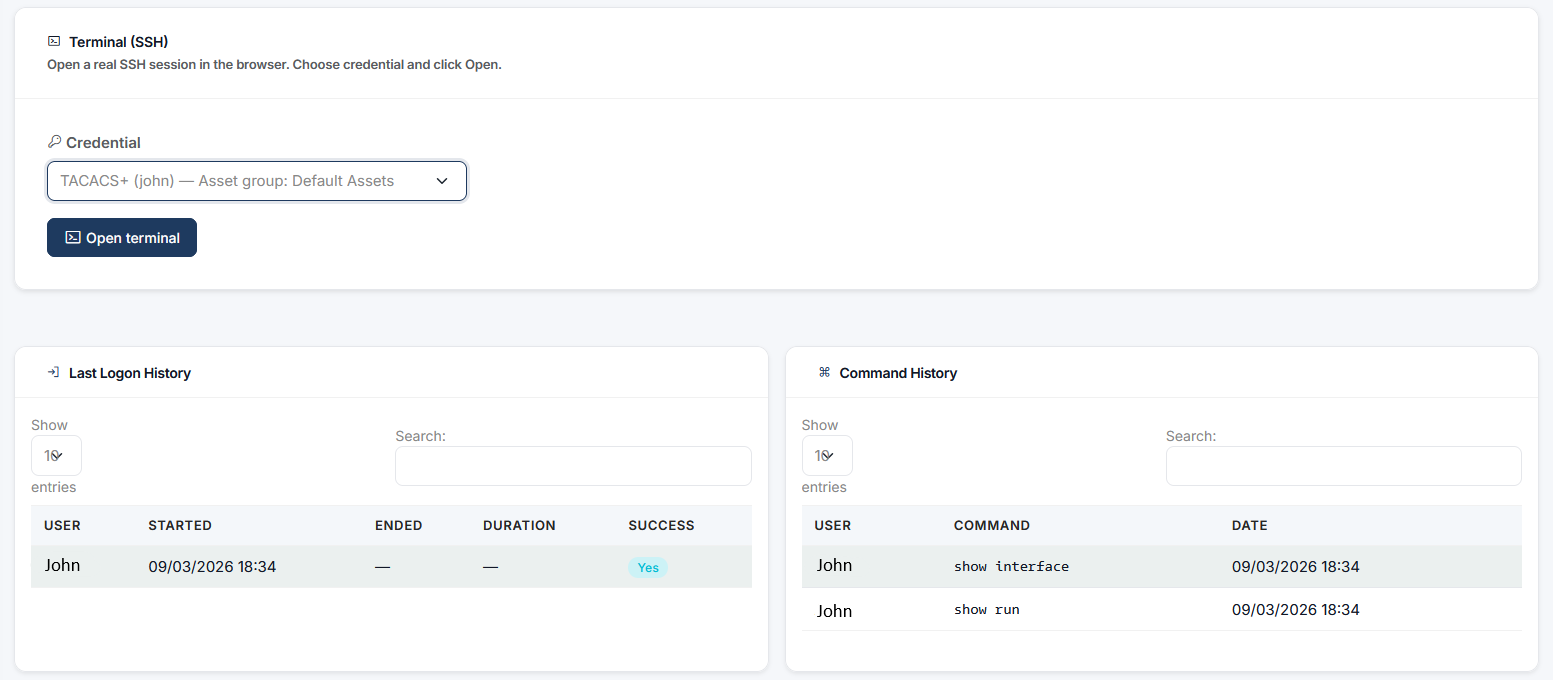
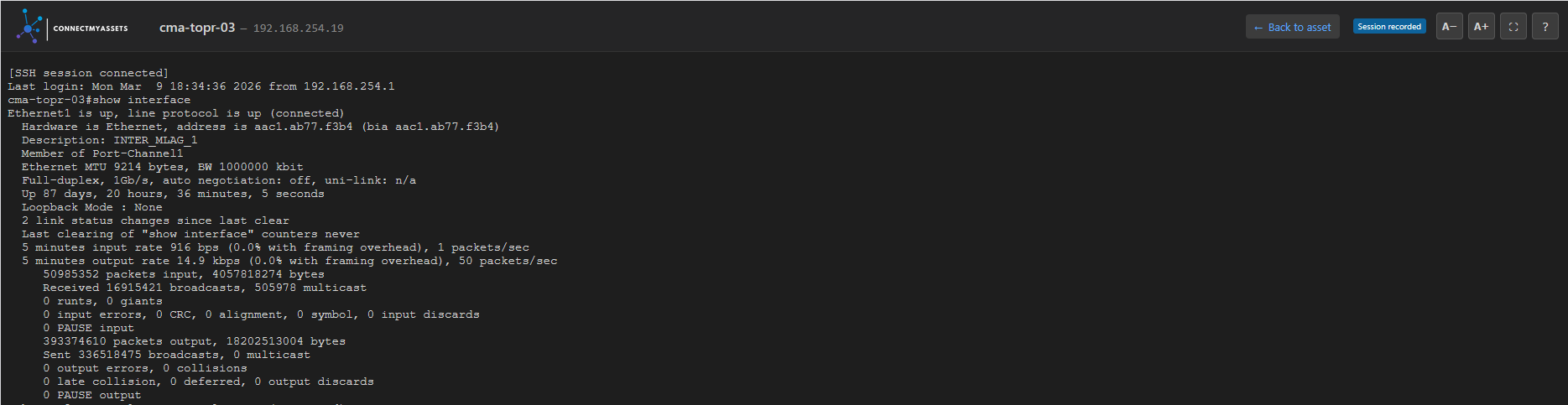
Modern infrastructure management platforms go a step further by integrating the bastion directly into the asset management workflow.
With ConnectMyAssets, administrators can access network equipment directly from the asset page through an integrated SSH bastion. Instead of manually opening a terminal and managing multiple jump servers or credentials, the administrator simply selects the device in the platform and launches an SSH session.
This approach provides several operational advantages:
- Direct SSH access from the asset inventory
- Centralized access point for all network devices
- Simplified operations for administrators
- Improved security by limiting entry points to the infrastructure
By centralizing access through a built-in bastion, ConnectMyAssets makes it easier for teams to manage their infrastructure while maintaining strict access control.
Key Benefits of Using an SSH Bastion
1. Centralized Access Control
A bastion host centralizes authentication and authorization policies.
Access to network devices can be managed through a single system, making it easier to enforce security rules and user permissions.
This simplifies:
- User access management
- Role-based permissions
- Access revocation when users leave the organization
2. Improved Security Posture
By removing direct access to network equipment, the attack surface is significantly reduced.
Network devices can be placed in isolated management networks that are only reachable through the bastion host.
This approach helps protect critical infrastructure from:
- Unauthorized access
- Credential brute-force attempts
- Lateral movement during a cyberattack
3. Auditability and Traceability
A bastion host can log all administrative sessions, providing visibility into who accessed which device and when.
These logs are extremely valuable for:
- Security investigations
- Compliance requirements
- Operational troubleshooting
Session recording and command logging also help maintain accountability within IT teams.
4. Simplified Network Architecture
Instead of opening SSH access to many IP addresses across the network, administrators only need to allow access to a single bastion endpoint.
This simplifies firewall policies and improves overall infrastructure hygiene.
5. Secure Remote Access for Distributed Teams
With more organizations operating distributed environments and remote teams, bastion hosts allow secure access to infrastructure without exposing management interfaces to the public internet.
Administrators connect to the bastion securely and then reach internal devices without compromising security.
Best Practices When Implementing a Bastion Host
To maximize security, several best practices should be followed:
- Enforce multi-factor authentication (MFA)
- Use SSH key-based authentication
- Restrict access using least privilege principles
- Enable session logging and monitoring
- Regularly update and patch the bastion system
A bastion host should be treated as a critical security component of the infrastructure.
Conclusion
As network infrastructures grow more complex and distributed, controlling administrative access becomes increasingly important. Implementing an SSH bastion host provides a secure, centralized, and auditable way to manage access to critical network devices.
Platforms like ConnectMyAssets go even further by integrating the bastion directly into the asset management platform. Administrators can launch SSH sessions directly from an asset, simplifying operations while ensuring that access to network devices always goes through a single secure entry point.